Soup
Start with
Bay leaf takes the whole simmer to give anything up. In early, out before you serve.
Also good
212 S. Commercial St. · Branson, MO
417-527-3220
This is the shortlist from the printed seasoning charts.
 Off the printed charts.
The same ones we hand out in the shop.
Off the printed charts.
The same ones we hand out in the shop.
Twenty seasonings may work. Dinner doesn't need all twenty.
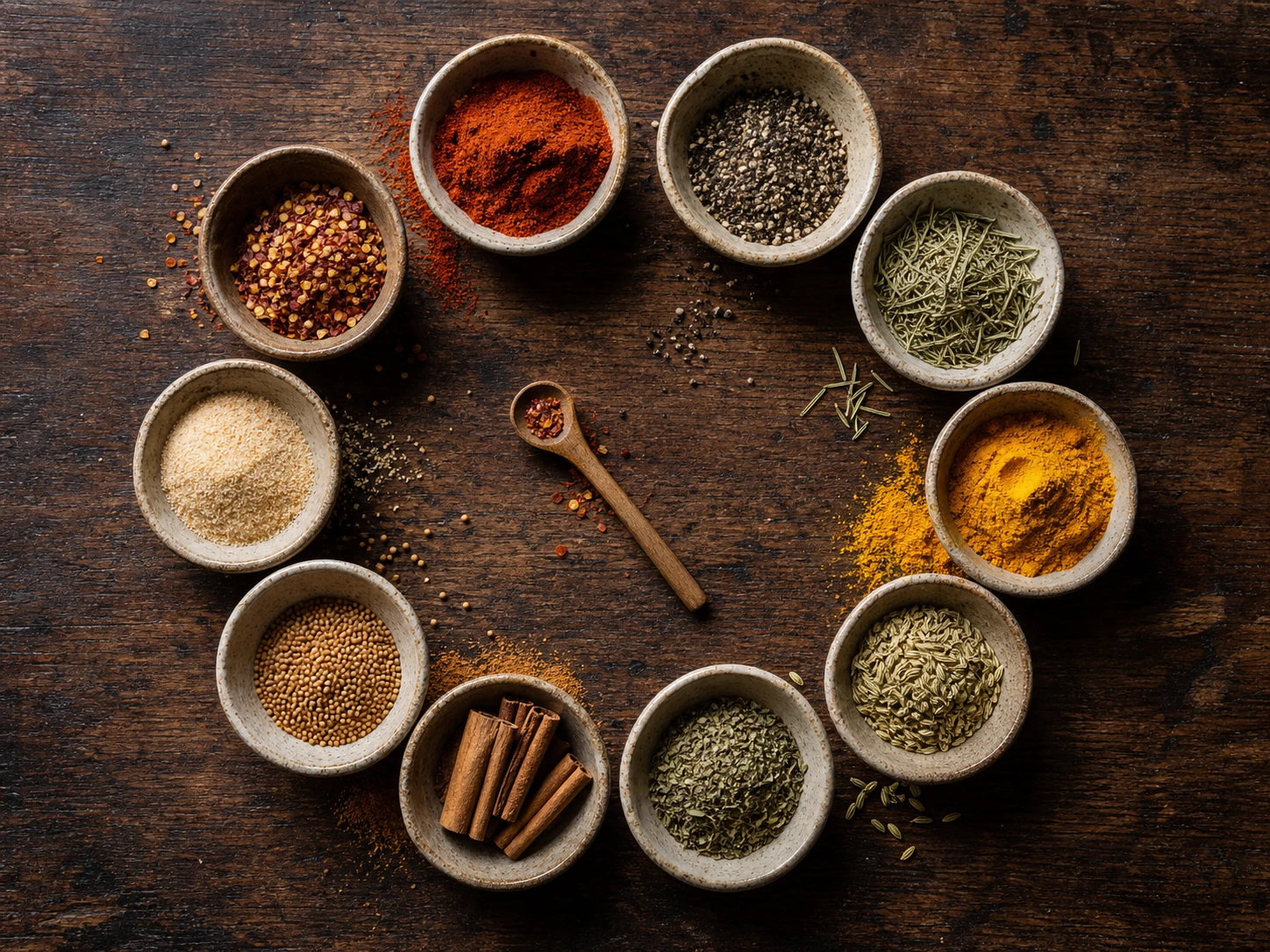
Open the jars and hold them close. Your nose gets a vote.
Start small. You can put more in. Getting it back out is harder.
From the shop counter
Use the chart as a quick starting point, then follow the detailed lists below when you want more options.
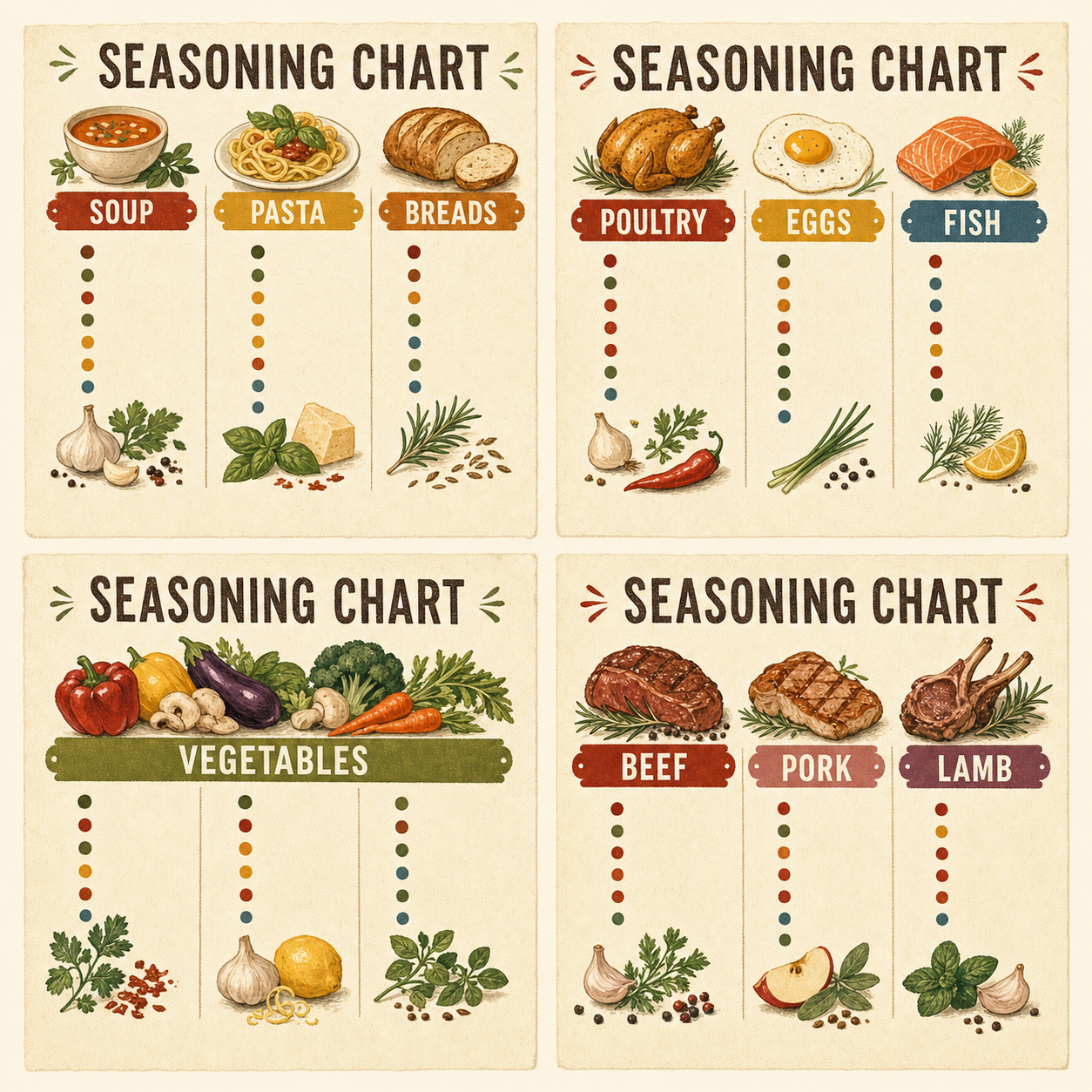
This is the shortlist from the printed seasoning charts. Each food opens with three seasonings that get along, then the rest of what belongs on the list. Nine times out of ten the first three are enough.
Start with
Bay leaf takes the whole simmer to give anything up. In early, out before you serve.
Also good
Start with
Dried oregano wants the sauce. Fresh basil wants the bowl. Tear it in after the heat is off.
Also good
Start with
Rye and caraway is the one everybody knows. Cardamom in a sweet dough is the one I'd try next.
Also good
Start with
Salt the bird the day before if you can remember. Every seasoning after that works better.
Also good
Start with
Widely versatile, eggs can be seasoned with almost anything to suit your taste.
Also good
Start with
Delicate fish gets buried fast. Two seasonings and a squeeze of something sour is usually the whole job.
Also good
Start with
On their own, grilled, steamed, sautéed, or roasted, vegetables don't need much but can go into every cuisine.
Also good
Start with
Cumin and chili powder pull it toward chili. Rosemary and garlic pull it toward a roast. I'd pick the direction before opening anything.
Also good
Start with
Pork will take sweet, warm, or properly smoky. It won't take all three at once.
Also good
Start with
A great alternative to beef, and making a comeback.
Also good
The chart backwards. Find the jar that's been in the cabinet since last winter and see where it goes tonight. All 44 seasonings are in here now, and a ★ marks the foods I'd reach for it first.
Garlic lands on seven of the ten lists, which is either useful information or a description of my cooking.
Same seasoning, different moment, different dinner. This is the part that separates a pot that tastes like something from a pot that tastes like a pot.
First, in a dry pan
Cumin seed, coriander, mustard seed, fennel. Traditionally, most whole spices should be toasted in a dry pan until aromatic, and then ground. It's the step most people skip and the one you'd notice.
After the onions
Paprika, chili powder, turmeric, cinnamon. They scorch in under a minute. Stir them around for thirty seconds, then get liquid in the pan.
With the liquid
Oregano, thyme, rosemary, bay leaf. They need time and moisture to open up. Into the pot with the tomatoes, not onto the plate.
Heat off
Parsley, cilantro, basil, dill, chives. Heat flattens them out. Last thing, every time, and more than you think.
Swapping dried for fresh? Dried runs about three times stronger by volume. Where a recipe asks for a tablespoon of fresh oregano, a teaspoon of dried gets you there.
Call me at 417-527-3220 and tell me what you're cooking. That's usually enough to get somewhere. Or come to 212 S. Commercial St. in Branson and open a few jars.